
Brand Identity: More Than a Logo, It’s the Soul of Your Business
Garrima
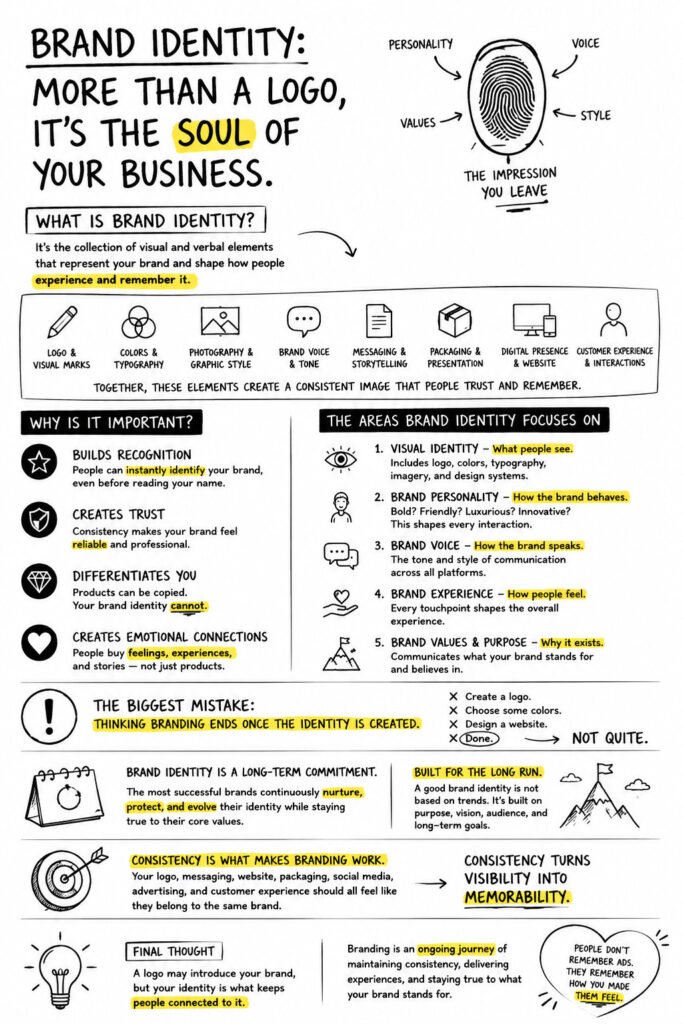
When people hear the term “brand identity,” the first thing that often comes to mind is a logo. While a logo is certainly a part of it, brand identity is much bigger than that.
Think of it this way: if your business were a person, the logo would be its face, but brand identity would be its personality, voice, values, style, and the impression it leaves on everyone it meets.
A strong brand identity helps people recognize, remember, and trust your business. In today’s crowded market, where customers have endless choices, that trust can make all the difference.
Brand identity is the collection of visual and verbal elements that represent a business. It is how a brand presents itself to the world and how people experience it over time.
It includes:
- Logo and visual marks
- Colours and typography
- Photography and graphic style
- Brand voice and tone of communication
- Messaging and storytelling
- Packaging and product presentation
- Website and digital presence
- Customer experience and interactions
Together, these elements create a consistent image that people associate with a brand.
Why Is Brand Identity Important?
Imagine meeting someone who behaves differently every time you see them. One day they’re professional, the next day they’re casual, and another day they’re completely unrecognizable. Trust would be difficult to build.
The Brand Gap: How to Bridge the Distance Between Business Strategy and Design*, by Marty Neumeier
Branding is a concept that’s often misunderstood. The Brand Gap by Martin Neumeier cuts through the confusion by presenting a unified theory of brand-building. The author explains that in order to build a brand, you need to ask three essential questions: Who are you? What do you do? Why does it matter?
Brands work the same way.
A clear and consistent brand identity:
Builds Recognition
People can instantly identify your business, even before reading your name. Think about how certain colours, fonts, or visual styles immediately remind you of a specific company.
Creates Trust
Consistency makes a brand feel reliable. Customers are more likely to choose brands that appear professional and dependable.
Differentiates You From Competitors
Products and services can often be copied. A unique brand identity cannot. It becomes one of your strongest competitive advantages.
Creates Emotional Connections
People don’t only buy products; they buy feelings, experiences, and stories. A strong brand identity helps create those emotional connections.
The Areas Brand Identity Focuses On
Many people assume branding is only about design. In reality, it touches every part of a business.
1. Visual Identity
This is what people see.
- Logo
- Color palette
- Typography
- Icons
- Photography style
- Design systems
These elements create visual consistency across all touchpoints.
2. Brand Personality
This is how the brand behaves.
Is it bold? Friendly? Luxurious? Innovative? Playful?
A brand personality guides how a business communicates and connects with people.
3. Brand Voice
This is how the brand speaks.
A financial institution may sound confident and professional, while a lifestyle brand may sound conversational and inspiring.
The voice should remain consistent across websites, social media, advertisements, and customer interactions.
4. Brand Experience
This is how people feel when interacting with the brand.
From visiting a website to opening a package or speaking with customer support, every touchpoint contributes to the overall brand experience.
5. Brand Values and Purpose
Customers increasingly support brands that stand for something meaningful.
A strong identity communicates not only what a company sells but also what it believes in and why it exists.
The Biggest Mistake: Thinking Branding Ends Once the Identity Is Created
One of the most common misconceptions is that brand identity is a one-time project.
Create a logo.
Choose some colours.
Design a website.
Done.
Not quite.
A brand identity is not a destination…it’s a long-term commitment.
The most successful brands continuously nurture, protect, and evolve their identity while staying true to their core values.
Brand Identity Must Be Built for the Long Run
A good brand identity should not follow temporary trends.
Trends come and go.
Your brand remains.
That’s why identity should be created around the brand’s purpose, vision, audience, and long-term goals—not around what’s fashionable today.
When built strategically, a brand identity can remain relevant for years while adapting to changing markets and customer expectations.
The strongest brands evolve without losing who they are.
Consistency Is What Makes Branding Work
A brand identity only becomes powerful when it is applied consistently.
Your logo, messaging, social media, packaging, advertising, website, presentations, and customer experience should all feel like they belong to the same brand.
Consistency transforms a brand from something people see into something people remember.
Final Thoughts
Brand identity is not just about looking good. It is about creating meaning, building trust, and shaping how people perceive your business over time.
A logo may introduce your brand, but your identity is what keeps people connected to it.
The most successful brands understand that branding is not a one-time design exercise. It is an ongoing journey of maintaining consistency, delivering experiences, and staying true to what the brand stands for.
Because in the end, people don’t remember every advertisement they see. They remember how a brand made them feel.
And that feeling is what great brand identity is designed to create.
For more find out here-
25 Brand Guidelines examples to get inspired and learn from https://www.manypixels.co/blog/brand-design/brand-guides
For all the books you can know about
https://brandfolder.com/resources/9-branding-books/
Leave a Comment