
Sustainable e-commerce matters?
Garrima
“Necessity is the mother of invention.”
E-commerce was built to solve a simple human need: access, speed, and convenience. As it scales, that same need now asks a harder question: how can growth continue without exhausting resources, people, and trust? The answer lies in four essential pillars that together define sustainable e-commerce.
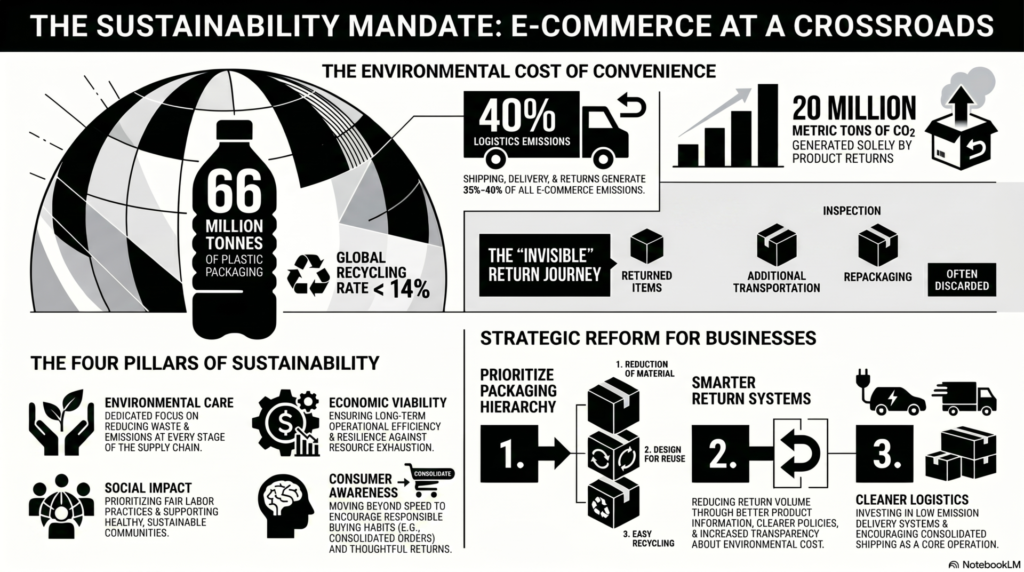
Environmental care focuses on reducing waste and emissions. Economic viability ensures long-term efficiency and resilience. Social impact emphasizes fair labour and healthy communities. Consumer awareness encourages responsible buying habits and thoughtful returns.
How Today’s E-commerce Is Creating Environmental Strain
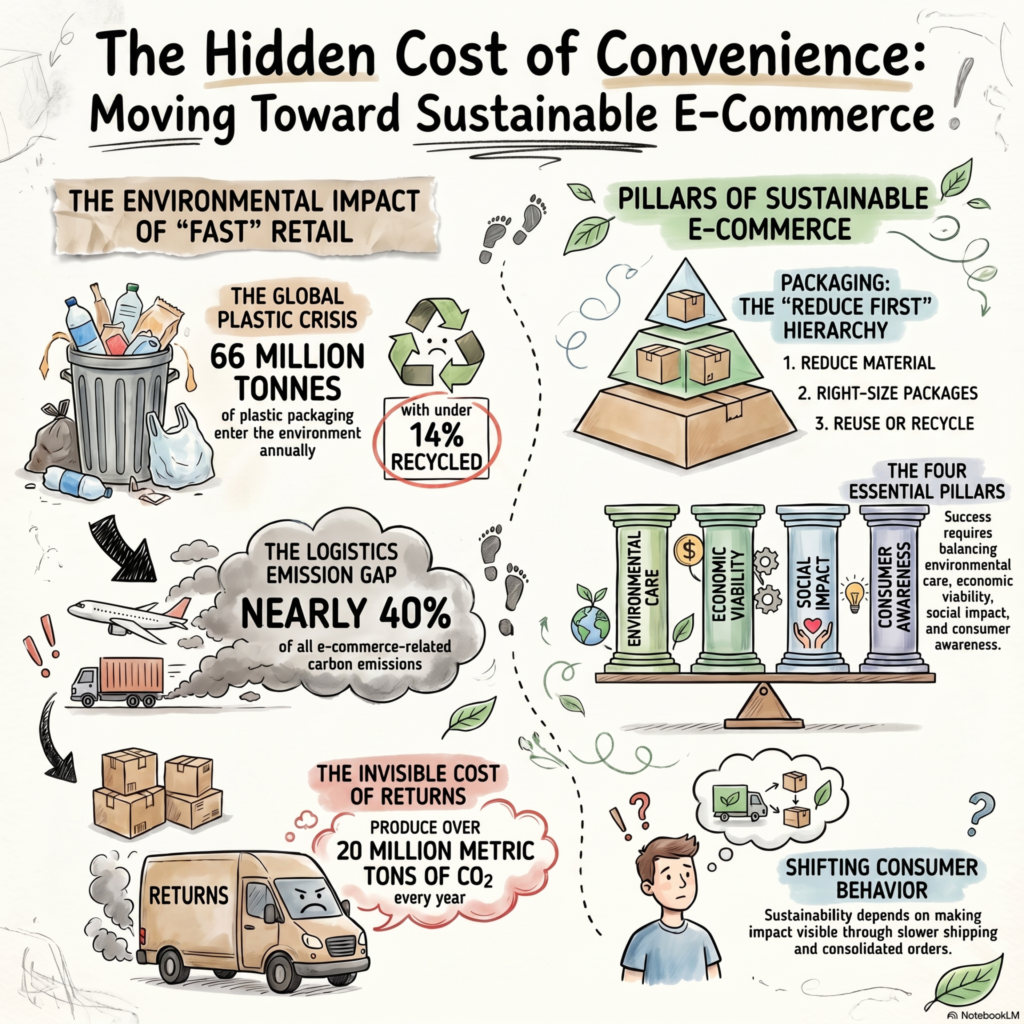
The rapid expansion of e-commerce has delivered unmatched convenience, but it has also intensified environmental stress. About 66 million tonnes of plastic packaging enter the environment each year, while less than 14 percent is recycled globally, leaving most waste to pollute land and water. Source: OECD Global Plastics Outlook
Beyond packaging, shipping, delivery, and returns generate nearly 35 to 40 percent of e-commerce-related emissions, with product returns alone producing over 20 million metric tons of CO₂ annually. As global plastic production heads toward doubling by 2050, today’s model of online retail risks trading short-term efficiency for long-term environmental damage. Source: UN Environment Programme
For e-commerce to reduce waste meaningfully, packaging decisions must prioritize reduction first, reuse second, and recycling last. Without this shift, green packaging risks becoming another sustainability claim that looks good but changes little. True green packaging focuses on using less material, right-sizing packages, and designing for reuse or easy recycling, rather than simply switching labels
The Hidden Cost of Returns
Returns feel effortless. A wrong size, a quick decision, an easy send-back. But what happens once the package leaves our doorstep?
Returned items do not simply reverse their journey. They are transported again, inspected, repackaged, and often discarded. Each return adds more waste, more fuel use, and more emissions, costs that remain largely invisible to the shopper.
Easy returns also shape buying behaviour. When there is little consequence, ordering multiple options or impulse purchases becomes normal. This raises a quiet question: is convenience encouraging excess?
The issue is not whether returns should exist, but whether they should remain thoughtless. Rethinking returns through better product information, clearer policies, and greater transparency may be one of the most overlooked paths to sustainable e-commerce.
Consumer Awareness: The Missing Link:
E-commerce sustainability is shaped as much by consumer behaviour as by systems. Fast delivery, free shipping, and easy returns have made convenience effortless, while their environmental costs remain invisible.
When impact stays unseen, it rarely influences choice. Simple actions such as slower shipping, fewer returns, or consolidated orders can make a difference at scale. Sustainable e-commerce depends not on restricting consumers, but on making awareness part of the buying experience.
What Businesses Must Change Next
The future of e-commerce will depend on choices made beyond speed and scale. Businesses must reduce excess packaging, design smarter return systems, and invest in cleaner logistics, not as add-ons, but as core operations. Transparency matters. When companies clearly communicate environmental impact, consumers are better equipped to choose responsibly.
Sustainable e-commerce is no longer optional or symbolic. As online retail continues to grow, the challenge is to preserve convenience without deepening environmental harm. The path forward lies in balance, where innovation serves both consumers and the systems that support them.
Share your experience, where you encountered situations where packaging waste, returns, or delivery practices felt wasteful or challenging?
Leave a Comment